
Rapid Radios Require Internet Access
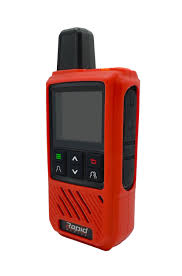
Rapid Radios offer high-speed instant group and individual voice communications at broadband quality levels. This solution is scalable and has no inherent architecture limitations on groups or fleet size. No monthly fee (though they do have a $50 per radio/per year renewal charge) and no contracts. But there’s a large upfront cost for the equipment.
Unlike cellular networks, rapid radios can work in areas where there is no internet. In fact, they are often used in remote locations to allow people to communicate without relying on the cellular network. This is useful for people in places like forests or mines, who may not have access to a cell signal. These radios are also essential for event coordinators who need to relay information quickly. They can alert warehouse staff to stock up on supplies or send messages to maintenance teams about issues at the venue.
The rapid radios are designed to deliver instant group and individual communication at broadband quality levels that surpass traditional land mobile radio (LMR) and other two-way radio solutions. These radios provide a cost-effective and easy to manage solution that supports high-speed instant communication. The system is built on a revolutionary all-Australian secure protocol to ensure true push-to-talk performance.
Do Rapid Radios Require Internet Access?
It is a simple, flexible, and highly-scalable platform with no inherent architecture limitations for group or fleet size. A feature-rich dispatcher suite enables complete end-to-end management. Rapid can connect to a variety of cellular networks and provides a seamless connectivity experience between multiple sites. The hardware is a lightweight, portable unit that can be easily set up and broken down for quick deployment and reconfiguration. The system is available in different frequencies to support a broad range of geospace and astronomy research, including imaging radar interferometry of the ionosphere and precision measurement of solar and Jovian radio bursts.
The radios are programmed by Rapid WiFit and are not programmable by the user. They are connected to the computer using a standard Ethernet cable that can be up to several hundred feet long. A hub can also be plugged into the radio to provide access for many computers. The radio can support up to 253 client computers with the use of a Linksys DSL/Cable router.
Rapid Radios are a push to talk walkie-talkie set that works nationwide. They claim to have unlimited range and no monthly fees. They also say they can work in areas without cell service. However, their devices don’t support the full spectrum of LTE bands a modern cell phone supports. And they can only be used if you have line of sight to the transmitters. They are not going to work if there is a mountain between you and the transmitters or if the signal can’t penetrate concrete walls, trees, or wood buildings.
They are using unlicensed ISM (Industrial, Scientific, Medical) frequency bands like 2.4 Ghz which is heavily utilized by a variety of other ISM device users and is vulnerable to interference from lightning strikes and other sources. They would be able to serve more customers in densely populated areas but the bandwidth would eventually become saturated, as it is not licensed and they can’t buy exclusive use of the band the way the big guys have done with the LMDS/MMDS licensed spectrum bands.
Designed to significantly outperform traditional two-way radio solutions, Rapid provides instant group and individual communication at broadband quality levels that exceed those of LMR systems. Rapid offers no inherent architecture limitation on either group or fleet size, and has a feature-rich dispatcher suite for optimum management of a communications system.
Easily manage on-air content and metadata with Rapid’s simple UI. Quickly create weekly templates and override them for special events. Import show and segment metadata directly from NPR’s MetaPub and Composer services. Automatically match incoming music tracks from your automation system with Rapid’s catalog, and import Now Playing track feeds to display on HD Radio channels, FM broadcasts, websites and apps. Rapid supports a wide range of Studio Automation systems. Software and data are securely hosted on selected AWS (Amazon Web Services) servers ensuring high levels of security and quality.