
fabrication process for rigid flex rigid pcb
The fabrication process for rigid-flex-rigid PCBs (Printed Circuit Boards) is a complex and highly specialized procedure that involves several intricate steps to produce these unique circuit boards. Rigid-flex-rigid PCBs are renowned for their ability to combine the benefits of both rigid and flexible substrates, offering enhanced durability, reliability, and flexibility in a variety of electronic applications. Understanding the fabrication process sheds light on the intricacies involved in creating these advanced PCBs.
The fabrication process begins with the design phase, where engineers work closely with clients to develop a customized PCB layout that meets specific requirements and specifications. Advanced CAD (Computer-Aided Design) software is used to create a detailed blueprint of the PCB design, considering factors such as component placement, trace routing, and the arrangement of rigid flex rigid pcb sections. This initial phase serves as the foundation for the subsequent stages of the fabrication process.
Once the PCB design is finalized, the fabrication process progresses with the manufacturing of the rigid and flexible substrates. Rigid substrates, typically composed of FR-4 fiberglass, undergo a series of steps involving layering, bonding, and curing of epoxy resin impregnated with woven glass fiber reinforcement. Flexible substrates, such as polyimide (PI) or polyester (PET), are manufactured using materials optimized for flexibility and tear resistance.
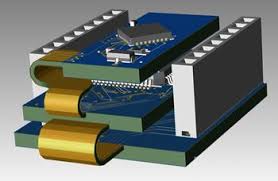
Can you explain the fabrication process for rigid flex rigid pcb?
Following substrate fabrication, the next stage involves creating the conductive traces and component pads on both rigid and flexible layers of the PCB. This is achieved through a combination of etching, plating, and photolithography techniques, where a layer of copper is deposited onto the substrate, patterned with a photoresist mask, and etched to remove unwanted copper. This process forms the intricate circuitry that enables the transmission of electrical signals between components.
After the conductive traces are created, the next step in the fabrication process is the application of the solder mask and protective coatings. The solder mask is applied to the PCB surface to insulate the conductive traces and prevent unintended electrical connections during soldering. This is typically achieved through screen printing or spray coating methods, followed by curing using ultraviolet (UV) light or heat. Additionally, protective coatings, such as conformal coatings or encapsulants, may be applied to enhance the PCB’s durability and resistance to environmental factors.
Once the solder mask and protective coatings are applied, the rigid and flexible layers are laminated together to create a unified structure. This involves sandwiching the layers together and subjecting them to heat and pressure, activating the adhesive layers and bonding the substrates and conductive traces into a cohesive unit. The lamination process ensures a seamless transition between rigid and flexible sections of the PCB, providing mechanical support and stability while maintaining reliable electrical connections.
After lamination, the final stage of the fabrication process is the assembly of components onto the PCB. Electronic components, such as resistors, capacitors, and integrated circuits, are placed onto the PCB and soldered into place using automated or manual soldering techniques. Advanced assembly methods, such as surface mount technology (SMT) or ball grid array (BGA) packaging, may be employed to accommodate the miniaturization and high-density requirements of modern electronic devices.
In conclusion, the fabrication process for rigid-flex-rigid PCBs involves several intricate steps, including design, substrate fabrication, conductive trace creation, solder mask application, lamination, and component assembly. Each stage requires careful attention to detail and expertise to ensure the final product meets the stringent requirements of various electronic applications. As technology continues to advance, innovations in materials, processes, and equipment will further enhance the performance and versatility of rigid-flex-rigid PCBs in a wide range of industries.