
size limitations for pcb circuit board assembly
In the realm of electronics manufacturing, Printed Circuit Boards (PCBs) serve as the foundational framework upon which electronic components are mounted, interconnected, and brought to life. While the design and fabrication of PCBs have evolved significantly over the years, a common question that arises is whether there are any size limitations for PCB circuit board assembly. The answer to this question is nuanced and depends on various factors spanning design considerations, manufacturing capabilities, and application requirements.
Traditionally, PCB size limitations were primarily influenced by the manufacturing processes and equipment available. Larger PCBs posed challenges in terms of handling, processing, and ensuring consistent quality across the entire board surface. As a result, manufacturers often imposed constraints on PCB size to optimize production efficiency and minimize material wastage. However, advancements in manufacturing technology, such as automated assembly lines, precision milling machines, and robotic handling systems, have significantly expanded the feasible size range for PCBs.
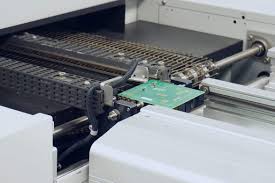
Despite these advancements, practical considerations still come into play when determining the size limitations for pcb circuit board assembly. One critical factor is the physical dimensions of the manufacturing equipment itself. While modern machinery can handle larger PCBs than ever before, there are still practical limits dictated by the size of assembly lines, soldering ovens, and other production machinery. Manufacturers must ensure that their equipment is capable of accommodating the desired PCB size without compromising efficiency or quality.
Are there any size limitations for pcb circuit board assembly?
Moreover, the complexity of the PCB design and the density of components can influence size limitations. As PCBs become more densely populated with components and traces, there is less available space for routing and accommodating larger dimensions. High-density interconnect (HDI) technology has enabled the miniaturization of electronic devices by packing more functionality into smaller form factors. However, this trend also imposes constraints on the physical size of the PCB, as designers must strike a balance between functionality, space utilization, and manufacturability.
Application requirements and environmental constraints also play a role in determining PCB size limitations. In certain industries such as aerospace, automotive, or medical devices, space constraints may dictate the maximum allowable PCB size to fit within the confines of the final product. Additionally, environmental factors such as temperature extremes, vibration, or shock resistance may necessitate compact designs to ensure reliability and durability in harsh operating conditions.
The emergence of flexible and rigid-flex PCB technologies has further blurred the lines of traditional size limitations. Flexible PCBs offer unparalleled flexibility and conformability, allowing designers to create PCBs that bend, twist, and fit into unconventional spaces. Rigid-flex PCBs combine the benefits of rigid and flexible substrates, enabling the integration of multiple PCB sections into a single, compact assembly. These innovations have opened up new possibilities for PCB size and shape, enabling manufacturers to push the boundaries of traditional design constraints.
In conclusion, while there are practical considerations and constraints that influence the size limitations for PCB circuit board assembly, advancements in manufacturing technology, design innovation, and material science continue to expand the realm of possibilities. Modern manufacturing capabilities, coupled with flexible and rigid-flex PCB technologies, have significantly broadened the feasible size range for PCBs, allowing for greater design freedom and customization. As electronics continue to evolve and diversify, the boundaries of PCB size limitations will likely continue to be pushed, enabling the creation of increasingly compact, efficient, and innovative electronic devices.