
PCB during assembly
Mounting components onto a Printed Circuit Board (PCB) during assembly is a meticulous process that involves several stages, each critical for ensuring the functionality and reliability of the final electronic product. This process primarily involves two major techniques: surface-mount technology (SMT) and through-hole technology (THT), each suited to different types of components and applications.
Surface-mount technology (SMT) is the most prevalent method for mounting components onto a PCB. This technique involves placing components directly onto the surface of the board without the need for drilling holes. The SMT process begins with the application of solder paste to the PCB. Solder paste, a mixture of tiny solder balls and flux, is applied to the board using a stencil that ensures the paste is precisely deposited onto the pads where the components will be placed.
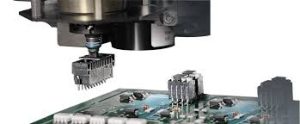
Once the solder paste is applied, the pcb assembly services moves to the pick-and-place machine, an automated system designed to accurately position components on the board. This machine uses robotic arms equipped with vacuum nozzles to pick components from reels or trays and place them onto the solder paste-covered pads. The placement must be highly accurate, as even slight misalignments can affect the performance of the PCB. Modern pick-and-place machines are capable of placing thousands of components per hour, making them essential for high-volume production.
How are components mounted onto a PCB during assembly?
After component placement, the PCB undergoes reflow soldering. In this process, the board is passed through a reflow oven, where it is gradually heated to melt the solder paste. The oven typically has several temperature zones to ensure controlled heating and cooling. As the solder paste melts, it forms solid solder joints that secure the components to the PCB. The board is then cooled to solidify the solder, creating strong electrical and mechanical connections.
Through-hole technology (THT) is another method used for mounting components onto a PCB, particularly for components that require robust mechanical bonds, such as connectors, large capacitors, and components subject to mechanical stress. THT involves inserting the leads of components into holes drilled through the PCB. These leads are then soldered to pads on the opposite side of the board.
The THT process begins with the drilling of holes at specific locations on the PCB according to the design specifications. After drilling, the components are inserted into these holes manually or using automated insertion machines for high-volume production. The inserted components are then soldered using wave soldering or hand soldering. In wave soldering, the PCB is passed over a wave of molten solder, which coats the exposed leads and pads to form solid solder joints. Hand soldering is typically used for small production runs, prototypes, or components that cannot be wave soldered.
Selective soldering is a specialized technique used when both SMT and THT components are present on the same PCB, and only specific areas require soldering. This method involves the use of a small nozzle to apply molten solder to targeted areas, providing precise control over the soldering process and minimizing the risk of thermal damage to sensitive components.
After the components are mounted and soldered, the PCB undergoes inspection and testing to ensure all components are correctly placed and properly soldered. Automated optical inspection (AOI) systems use cameras to check for placement accuracy and solder quality, while in-circuit testing (ICT) and functional testing verify the electrical performance of the assembled PCB.
In conclusion, the mounting of components onto a PCB during assembly involves intricate processes designed to ensure precision and reliability. Surface-mount technology (SMT) and through-hole technology (THT) are the primary methods used, each with its own set of procedures and applications. SMT is favored for its efficiency and suitability for high-density boards, while THT is used for components requiring strong mechanical bonds. The use of advanced equipment like pick-and-place machines, reflow ovens, and wave soldering systems, combined with rigorous inspection and testing, ensures the production of high-quality, reliable electronic devices.